Navigating Adverse Effects, Contraindications, and Precautions in Vaccinations
Understanding the critical distinctions between Adverse Effects, Contraindications, and Precautions is fundamental to ensuring safe and effective vaccination for yourself and your loved ones. These terms aren't just medical jargon; they're the guardrails that protect us, guiding healthcare providers in making informed decisions about when a vaccine is appropriate, when it needs to be deferred, and what potential reactions to anticipate. When you step up for a vaccine, knowing these concepts empowers you to engage more confidently with your healthcare team, fostering trust and clarity in a process vital for public health.
At a Glance: Key Takeaways for Confident Vaccination
- Contraindications are absolute "stop signs" – conditions where a vaccine should not be given due to a significant risk of serious harm. Most are temporary.
- Precautions are "yield signs" – conditions where vaccination might carry a higher risk or interfere with diagnosis, prompting careful consideration or deferral. The benefit might still outweigh the risk.
- Adverse effects are unwanted, sometimes serious, reactions to a vaccine. While rare, they are closely monitored and are distinct from contraindications or precautions.
- Always screen: Healthcare providers use questionnaires to identify potential issues before every dose.
- Mild illness is usually fine: A runny nose or slight cough generally won't prevent vaccination.
- Moderate or severe illness: These are typically precautions, meaning vaccination should be deferred until you feel better.
- Hospitalization is an opportunity: If not acutely ill, get vaccinated while hospitalized!
- Many common concerns are NOT reasons to delay: Don't let misconceptions stand in the way of essential protection.
The Foundational Trio: Demystifying Adverse Effects, Contraindications, and Precautions
Before diving into specifics, let's lay a clear groundwork. These three terms often get conflated, but each plays a distinct role in vaccine safety.
What Are Adverse Effects?
An adverse effect (sometimes called an adverse event or reaction) is simply any unwanted or unexpected health problem that happens after vaccination. This spectrum ranges from mild, temporary issues like a sore arm or low-grade fever (which are common and a sign your immune system is working) to very rare but serious reactions, such as a severe allergic response (anaphylaxis).
It’s crucial to remember that correlation doesn't always equal causation. An adverse event simply means something happened after the vaccine; it doesn't automatically mean the vaccine caused it. However, robust monitoring systems (like VAERS in the U.S.) are in place precisely to track these events, investigate them thoroughly, and continually refine vaccine safety guidelines.
Contraindications: The Non-Negotiables
Think of a contraindication as a bright red "STOP" sign. If a recipient has a contraindication, the vaccine should not be administered because the risk of a serious adverse reaction is significantly increased. These are firm boundaries established to protect you.
For example, a severe allergic reaction (like anaphylaxis) to a previous dose of a vaccine or to one of its components is a common contraindication. This means if you had a life-threatening allergic reaction to the first dose of a vaccine, you would not receive subsequent doses.
Most contraindications, thankfully, are temporary. This means vaccination might be deferred for a period, but you can safely receive the vaccine later once the condition resolves or improves.
Precautions: Proceed with Caution
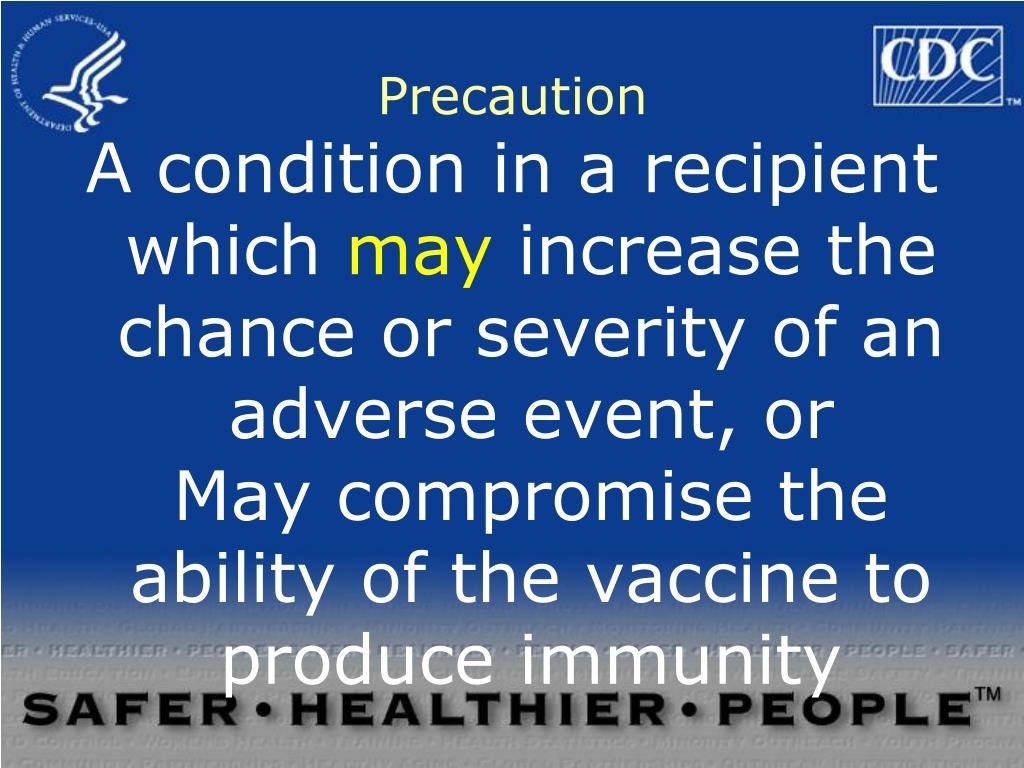
A precaution is like a "YIELD" sign. It's a condition that might increase the risk of a serious adverse reaction, potentially cause diagnostic confusion, or even compromise the vaccine's ability to protect you (its immunity). When a precaution is present, vaccination is generally deferred.
However, unlike a contraindication, a precaution doesn't always mean "no." It means the healthcare provider needs to carefully weigh the potential benefits of vaccination against the potential risks. In some cases, if the benefit of protection from the disease far outweighs the potential risks associated with the precaution, the vaccine may still be given.
Recent updates to vaccination guidelines have also explicitly broadened the definition of a "precaution" to include conditions that might confuse diagnostic accuracy. This highlights the comprehensive approach to ensuring vaccine safety and patient well-being.
Why These Distinctions Matter
Understanding the difference between a contraindication and a precaution isn't just academic; it directly impacts your health and your community's health.
- For your safety: It ensures you receive vaccines only when it's safe to do so, minimizing serious risks.
- For effective protection: It helps ensure the vaccine will actually work as intended, providing optimal immunity.
- To avoid unnecessary delays: Knowing what isn't a contraindication prevents missed opportunities for vital protection.
- To maintain trust: Transparent communication about potential risks and careful screening reinforces confidence in vaccine programs.
This framework is why your healthcare provider asks questions before every shot. It's not just paperwork; it's a critical safety check designed to apply these principles.
Every Shot Begins with a Screen: The Golden Rule of Vaccination
Vaccination isn't a one-size-fits-all process. Before every vaccine dose, your healthcare provider will perform a thorough screening. This isn't just good practice; it's a national standard, particularly for pediatric vaccinations.
Leveraging Screening Questionnaires
You'll likely be asked to fill out a screening questionnaire. These forms are designed to efficiently identify any potential contraindications or precautions. Be honest and thorough in your answers. Your responses are crucial for your provider to make the safest and most effective recommendation for you.
The Art of Deferral: Acute Illnesses
One of the most common reasons for deferring a vaccine is acute illness. But not all illnesses are treated equally:
- Mild Illness is Generally NOT a Barrier: If you or your child has a mild illness – think a common cold, a slight cough without fever, or mild diarrhea – vaccination can usually proceed. The safety and efficacy of vaccinating persons with mild illnesses are well-documented. Don't let a sniffle stop you from getting vital protection.
- Moderate or Severe Acute Illness IS a Precaution: If you're experiencing a moderate or severe acute illness, with or without a fever, this is generally considered a precaution for all vaccines. In these cases, it's best to defer vaccination until your symptoms have improved. Your body is already working hard to fight off the current illness, and it's prudent to wait until you're feeling better.
Making the Most of Hospital Stays
Surprisingly, hospitalization can be an excellent opportunity to catch up on recommended vaccinations. If a patient is hospitalized and not acutely moderately or severely ill, vaccination is recommended. Current, recent, or upcoming anesthesia, surgery, or hospitalization itself is not a contraindication. However, it may be a precaution depending on the specific circumstances. The goal is to ensure vaccination happens, either during the hospital stay or promptly at discharge.
If a patient is moderately or severely ill throughout their hospitalization, the vaccination should be scheduled for the earliest follow-up appointment after discharge, once their clinical symptoms have improved. The key takeaway: don't miss the chance for protection if you're well enough during a hospital visit!
Navigating Specific Vaccines: What You Need to Know
While general principles apply, many vaccines have their own unique set of contraindications and precautions. This detailed guide, informed by national standards, will help you understand the nuances.
Dengue Vaccine: Specific Context
The dengue vaccine has a very specific use case. It's recommended only for persons with laboratory-confirmed previous dengue infection AND who reside in endemic areas.
- Contraindications:
- Lack of laboratory evidence of previous dengue infection (this is crucial!).
- Severe allergic reaction to a previous dose or vaccine component.
- Severe immunodeficiency (e.g., from hematologic or solid tumors, chemotherapy, congenital immunodeficiency, long-term immunosuppressive therapy defined as receiving at least 20 mg prednisone or equivalent daily for ≥2 weeks, or severely immunocompromised HIV patients).
- Precautions:
- Pregnancy.
- HIV infection without severe immunosuppression.
- Moderate or severe acute illness.
DT, Td: Tetanus and Diphtheria Protection
These vaccines protect against diphtheria and tetanus.
- Contraindications:
- Severe allergic reaction to a previous dose or vaccine component.
- Precautions:
- Guillain-Barré syndrome (GBS) within 6 weeks of a previous tetanus-toxoid-containing vaccine.
- History of Arthus-type hypersensitivity reaction after a previous dose (a severe local reaction) – defer vaccination for at least 10 years after the last dose.
- Moderate or severe acute illness.
DTaP, Tdap: Broadening Protection to Pertussis
These vaccines add pertussis (whooping cough) protection to diphtheria and tetanus. DTaP is for younger children, Tdap for adolescents and adults.
- Contraindications:
- Severe allergic reaction to a previous dose or vaccine component.
- Encephalopathy (brain disease not attributable to another cause) within 7 days of a previous DTP, DTaP, or Tdap dose.
- Precautions:
- Progressive neurologic disorder (defer DTaP until the condition is stabilized).
- GBS within 6 weeks of a previous tetanus-toxoid-containing vaccine.
- History of Arthus-type hypersensitivity (defer for at least 10 years after the last dose).
- Moderate or severe acute illness.
The "Common Ground" Vaccines: Hepatitis A, B, Hib, HPV, IPV, Meningococcal, Pneumococcal, Zoster
Many widely used vaccines share similar contraindications and precautions. These include Hepatitis A, Hepatitis B, Haemophilus influenzae type b (Hib), Human Papillomavirus (HPV), Inactivated Poliovirus (IPV), quadrivalent meningococcal conjugate (MenACWY), meningococcal B (MenB), quadrivalent meningococcal polysaccharide (MPSV4), pneumococcal conjugate (PCV13, PCV15, PCV20), pneumococcal polysaccharide (PPSV23), and Zoster (shingles) vaccines.
- Common Contraindications:
- Severe allergic reaction to a previous dose or vaccine component.
- Additional Contraindications:
- Hepatitis B & HPV: Hypersensitivity to yeast (a vaccine component).
- Common Precautions:
- Moderate or severe acute illness.
- Additional Precautions:
- IPV: Pregnancy.
- MenACWY: Preterm birth (specifically for MenACWY-CRM, in infants younger than 9 months).
- MenB: Pregnancy; latex sensitivity (specifically for MenB-4c due to product/packaging components).
Influenza Vaccines: IIV, RIV, and the LAIV Nuances
Flu vaccines come in different forms: Inactivated Influenza Vaccine (IIV), Recombinant Influenza Vaccine (RIV), and Live, Attenuated Influenza Vaccine (LAIV).
IIV (Inactivated) & RIV (Recombinant)
- Contraindications:
- Severe allergic reaction (must be specific to the type of IIV or RIV vaccine if that's the only one you're considering).
- Precautions:
- GBS within 6 weeks of a previous influenza vaccine.
- Moderate or severe acute illness.
LAIV (Live, Attenuated Influenza Vaccine)
LAIV uses a weakened live virus, leading to more specific considerations.
- Contraindications:
- Severe allergic reaction to a previous dose or vaccine component.
- Concomitant aspirin or salicylate use in children and adolescents.
- Recent use of specific influenza antivirals: oseltamivir or zanamivir within 48 hours, peramivir within 5 days, or baloxavir within 17 days (due to reduced vaccine effectiveness).
- Pregnancy.
- Children aged 2-4 years with diagnosed asthma or wheezing in the last 12 months.
- Active cerebrospinal fluid (CSF) leaks or oropharyngeal leaks.
- Close contacts/caregivers of severely immunosuppressed persons who require a protected environment.
- Cochlear implants (due to potential CSF leak risk).
- Altered immunocompetence (weakened immune system).
- Anatomic or functional asplenia (absence of a spleen or a non-functioning spleen).
- Precautions:
- GBS within 6 weeks of a previous influenza vaccine.
- Asthma in persons aged 5 years or older.
- Medical conditions predisposing to a higher risk of influenza complications (e.g., chronic heart, lung, kidney, liver, neurologic/neuromuscular, or metabolic diseases).
- Moderate or severe acute illness.
MMR: A Closer Look at Live Virus Considerations
The Measles, Mumps, and Rubella (MMR) vaccine is a live attenuated vaccine, meaning it uses weakened versions of the viruses.
- Contraindications:
- Severe allergic reaction to a previous dose or vaccine component.
- Pregnancy.
- Known severe immunodeficiency (e.g., from hematologic/solid tumors, chemotherapy, congenital immunodeficiency, long-term immunosuppressive therapy, or severely immunocompromised HIV patients – specific CD4+ T-lymphocyte count/percentage criteria apply).
- Family history of altered immunocompetence in first-degree relatives, unless the recipient's immune competence is substantiated (i.e., proven to be normal).
- Precautions:
- Recent (within ≤11 months) receipt of an antibody-containing blood product (the interval depends on the specific product).
- History of thrombocytopenia (low platelet count) or purpura (skin discoloration from bleeding).
- Need for tuberculin skin testing or interferon-gamma release assay (IGRA) testing. The MMR vaccine can temporarily suppress reactivity to these tests; if not done concurrently, postpone the test ≥4 weeks after vaccination.
- Moderate or severe acute illness.
- Note: HIV-infected children may receive MMR if they are ≥12 months old and do not have severe immunosuppression.
Rotavirus: Unique Gastrointestinal Considerations
The rotavirus vaccine is given to infants to protect against severe diarrhea.
- Contraindications:
- Severe allergic reaction to a previous dose or vaccine component.
- Severe combined immunodeficiency (SCID).
- History of intussusception (a serious intestinal problem where one part of the intestine slides into another part).
- Precautions:
- Altered immunocompetence (other than SCID).
- Chronic gastrointestinal disease.
- Spina bifida or bladder exstrophy (for RV1 only, due to potential latex in the product or packaging).
- Moderate or severe acute illness.
Varicella: Chickenpox Vaccine Specifics
The varicella (chickenpox) vaccine is another live attenuated vaccine.
- Contraindications:
- Severe allergic reaction to a previous dose or vaccine component.
- Known severe immunodeficiency (e.g., from hematologic/solid tumors, chemotherapy, congenital immunodeficiency, long-term immunosuppressive therapy, or severely immunocompromised HIV patients).
- Pregnancy.
- Family history of altered immunocompetence (unless recipient's immune competence is substantiated).
- Precautions:
- Recent (within ≤11 months) receipt of an antibody-containing blood product.
- Moderate or severe acute illness.
- Receipt of specific antiviral drugs (acyclovir, famciclovir, or valacyclovir) 24 hours before vaccination (avoid these for 14 days after vaccination).
- Use of aspirin or aspirin-containing products (avoid for 6 weeks after vaccination due to a theoretical risk of Reye syndrome, though this has not been documented with the vaccine).
- Note: HIV-infected children may receive varicella vaccine if their CD4+ T-lymphocyte count is ≥15%.
Busting Vaccine Myths: Conditions That DON'T Stop the Shot
One of the most common reasons people miss out on crucial vaccination is misunderstanding what truly constitutes a contraindication or precaution. Many conditions are frequently (and incorrectly) perceived as barriers, leading to missed opportunities for protection. Let's clear up some common misconceptions.
General Misconceptions for All Vaccines
Many everyday situations and health conditions generally do not prevent you from getting vaccinated:
- Mild acute illness (with or without fever): As discussed, a simple cold or slight cough isn't usually a reason to delay.
- Lack of previous physical examination in a well-appearing person: You don't always need a full check-up right before a vaccine if you're feeling fine.
- Current antimicrobial therapy: Most antibiotics or antifungals are fine. Exceptions are specific antivirals for Ty21a oral typhoid, varicella, and LAIV4 vaccines.
- Convalescent phase of illness: Once you're recovering and feeling better, it's usually safe to vaccinate.
- Preterm birth: Generally not a contraindication, except for specific hepatitis B guidance for infants weighing less than 2,000g whose mothers are HBsAg-negative.
- Recent exposure to an infectious disease: This doesn't stop you from getting vaccinated against that disease or others.
- History of penicillin or other non-vaccine allergies: Allergies to things like penicillin, food, or insect stings are not relevant to vaccine safety.
- Relatives with allergies or receiving allergen extract immunotherapy: Family history of allergies or ongoing allergy shots for environmental allergens do not prevent vaccination.
- History of GBS (unless GBS within 6 weeks of influenza or tetanus-toxoid-containing vaccine): A general history of GBS is typically not a contraindication, only specific recent instances after certain vaccines.
DTaP/Tdap: Setting the Record Straight
For these pertussis-containing vaccines, several events that were once considered significant are now known to be safe:
- Fever within 48 hours after a previous DTP/DTaP dose.
- Collapse or shock-like state within 48 hours after a previous DTP/DTaP dose.
- Seizure within 3 days after a previous DTP/DTaP dose.
- Persistent, inconsolable crying for 3 hours or more within 48 hours after a previous DTP/DTaP dose.
- Family history of seizures, SIDS (Sudden Infant Death Syndrome), or other adverse events.
- Stable neurologic conditions like cerebral palsy or well-controlled seizures. These are generally not reasons to defer DTaP.
Hepatitis B & HPV: Clarity on Pregnancy and Pre-existing Conditions
- Hepatitis B: Pregnancy and autoimmune disease are not contraindications.
- HPV: Immunosuppression (unless severe), a previous equivocal or abnormal Papanicolaou (Pap) test, known HPV infection, breastfeeding, or a history of genital warts do not prevent HPV vaccination.
IIV (Inactivated Flu): Allergy Anxieties and Other Worries
Many people have concerns about flu shot components, but these are often unfounded:
- Nonsevere allergy (e.g., contact allergy) to latex, thimerosal, or egg. Modern flu vaccines are generally safe even with egg allergies, but discuss with your provider.
- Concurrent administration of Coumadin or aminophylline: These medications do not contraindicate the flu shot.
IPV: Polio Vaccine Specifics
- Previous receipt of one or more doses of oral polio vaccine: This is not a barrier to receiving the inactivated poliovirus vaccine.
LAIV (Live Flu): Who Can Safely Be Around Who
- Health-care providers or contacts of persons with chronic diseases/altered immunocompetence: It's generally safe for these individuals to receive LAIV, with the exception of close contacts of severely immunocompromised persons requiring a protected environment.
- Breastfeeding: Not a contraindication for LAIV.
MMR: Egg Allergies, TB Tests, and HIV Status
The MMR vaccine has several common misconceptions:
- Positive tuberculin skin test or simultaneous tuberculin skin or IGRA testing: These are not contraindications (though, as a precaution, if you need a TB test, it might be best to schedule it before or 4 weeks after MMR).
- Breastfeeding: Not a contraindication for the mother or baby.
- Pregnancy of recipient’s mother or other close/household contact: The vaccine virus does not typically spread this way.
- Recipient is female of child-bearing age: Vaccination is safe, but pregnancy should be avoided for 4 weeks post-vaccination.
- Immunodeficient family member/household contact: Generally safe, as the live vaccine virus is not typically shed or transmitted in a way that would endanger them.
- Asymptomatic or mildly symptomatic HIV infection: These individuals can often safely receive MMR, provided they are not severely immunocompromised.
- Allergy to eggs: This is generally not a contraindication for MMR vaccine.
PPSV23: Pneumococcal Misunderstandings
- History of invasive pneumococcal disease or pneumonia: These do not preclude future PPSV23 vaccination.
Rotavirus: Prematurity and Household Contacts
- Prematurity: Most premature infants can receive the rotavirus vaccine according to schedule.
- Immunosuppressed household contacts or pregnant household contacts: These individuals are not at increased risk from a vaccinated infant.
Varicella: Pregnancy and Immunocompromised Contacts
- Pregnancy of recipient’s mother or household contact: Not a contraindication.
- Immunodeficient family member/household contact: Generally safe. If the vaccine recipient develops a rash, they should avoid contact with immunocompromised persons for the duration of the rash, but this is a rare occurrence.
- Asymptomatic or mildly symptomatic HIV infection: These individuals can often receive the varicella vaccine if their immune status meets specific criteria.
- Humoral immunodeficiency (antibody deficiencies): These individuals can often receive the varicella vaccine.
Zoster: Addressing Immunosuppression and History
- Therapy with low-dose methotrexate, azathioprine, or 6-mercaptopurine for specific conditions: These medications, often used in autoimmune diseases, do not necessarily contraindicate the shingles vaccine (Shingrix).
- Health-care providers or contacts of patients with chronic diseases/altered immunocompetence: Not a contraindication for the recipient.
- Unknown or uncertain history of varicella in a U.S.-born person: You don't need to prove you had chickenpox to get the shingles vaccine.
Your Role in Confident Vaccination: Next Steps for Patients and Caregivers
Understanding Adverse Effects, Contraindications, and Precautions transforms you from a passive recipient into an active participant in your healthcare decisions. You now have a clearer picture of the meticulous thought process behind every vaccine recommendation.
Here's how you can best leverage this knowledge:
- Be Honest and Thorough: When filling out screening questionnaires or talking to your provider, provide complete and accurate health information. Don't omit details, even if they seem minor. This is the single most important step in ensuring your safety.
- Ask Questions: If you're unsure why a vaccine is being recommended, or if a specific condition you have might be a concern, don't hesitate to ask. A good healthcare provider will take the time to explain their reasoning. Remember, this knowledge empowers you. You might even find yourself in a conversation about how certain medications could interact with your overall health, reinforcing the holistic approach to your well-being.
- Trust the Process: Vaccination guidelines are not static. They are continually updated based on the latest scientific evidence, robust clinical trials, and ongoing surveillance data. The rules around contraindications and precautions are designed with your safety as the highest priority.
- Don't Self-Diagnose: While this article provides extensive information, it's a guide, not a substitute for professional medical advice. If you have a complex medical history, specific concerns, or are unsure about any recommendation, always consult with your doctor or healthcare team.
- Challenge Misinformation: Now equipped with accurate information, you can confidently address common myths and misconceptions about vaccines within your own circles, becoming an advocate for informed decision-making.
In the dance between individual health and community well-being, vaccines are powerful partners. By understanding the safety measures in place—the careful considerations of adverse effects, contraindications, and precautions—you contribute not only to your own health but also to the collective immunity that protects us all. Stay informed, stay vigilant, and get vaccinated with confidence.